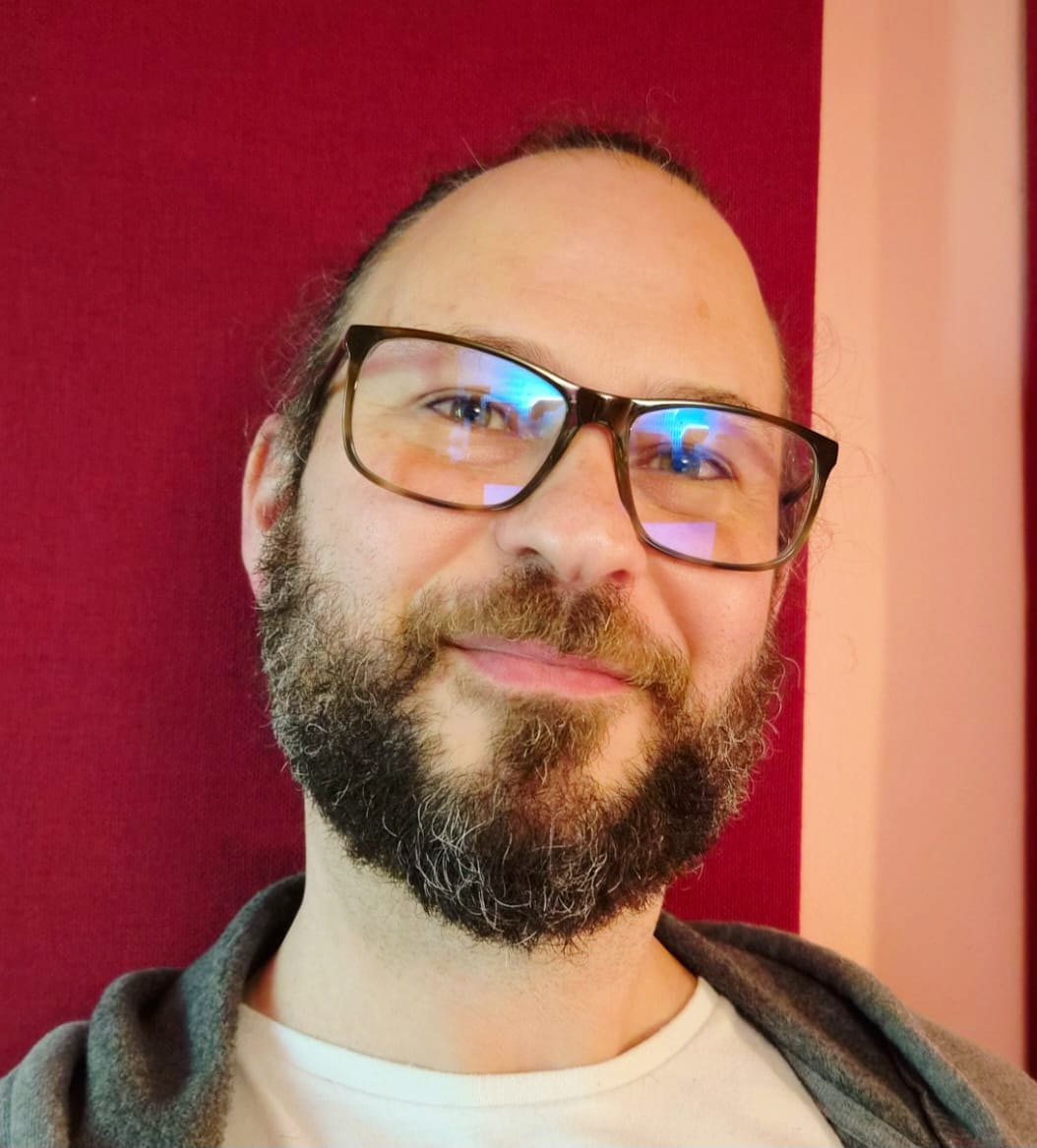
Beto Dealmeida
Musician and software engineer. Former climate scientist. Always a webmaster.
https://robida.net/contact@robida.netKey Biscayne, FL, 33149, USAMusician and software engineer. Former climate scientist. Always a webmaster.
https://robida.net/contact@robida.netKey Biscayne, FL, 33149, USAMusician and software engineer. Former climate scientist. Always a webmaster.
https://robida.net/contact@robida.netKey Biscayne, FL, 33149, USAI live in apartment 42.
When I was looking for a place to buy and I saw that this apartment was 42, I knew it was the right place for me. It's silly, I know — but it's also true. I look at all the other apartments in my condo, and I'm happy that I have 42. How can it not be the best apartment?
✿
I make coffee every morning. I grind the beans, I put them in my french press, and I wait 6 minutes. After pressing it, I fill up a 500ml thermos, and what's left in the french press is enough for 2 half mugs of coffee.
It's important that it's 2 half mugs, not 1 full mug. I pour half a mug, and I drink it slowly while I appreciate the day. Then I pour the other half, and I drink it slowly while I appreciate the day. Once I'm finished I start my work day.
Throughout the day I drink the resto of the coffee from the thermos.
✿
I was dead for almost 14 billions years.
After I die, I will be dead forever.
In the meantime, I'm here. I share space and time with someone I love, someone who's my best friend. It's such a wonderful miracle that I get to share time and space with her — being able to connect with someone in this brief existence, and fully share it with them.
✿
I try to leave things better than I found them. I help people, I create art, I use my empathy to solve problems.
✿
To me, that is the meaning of life.
Musician and software engineer. Former climate scientist. Always a webmaster.
https://robida.net/contact@robida.netKey Biscayne, FL, 33149, USA"is that ham processed? If it's processed I don't want it" Ma'am, that is an eleven pound whole slab of deli ham. It has no bones, fat, or connective tissue. It is an amalgamation of the meat of several pigs, emulsified, liquefied, strained, and ultimately inexorably joined in an unholy meat obelisk. God had no hand in the creation of this abhorrence. The fact that this ham monolith exists proves that God is either impotent to alter His universe or ignorant to the horrors taking place in his kingdom. This prism of pork is more than deli meat. It is a physical declaration of mankind's contempt for the natural order. It is hubris manifest. We also have a lower sodium variety if you would prefer that.
https://knowyourmeme.com/memes/is-that-ham-processedveganTrue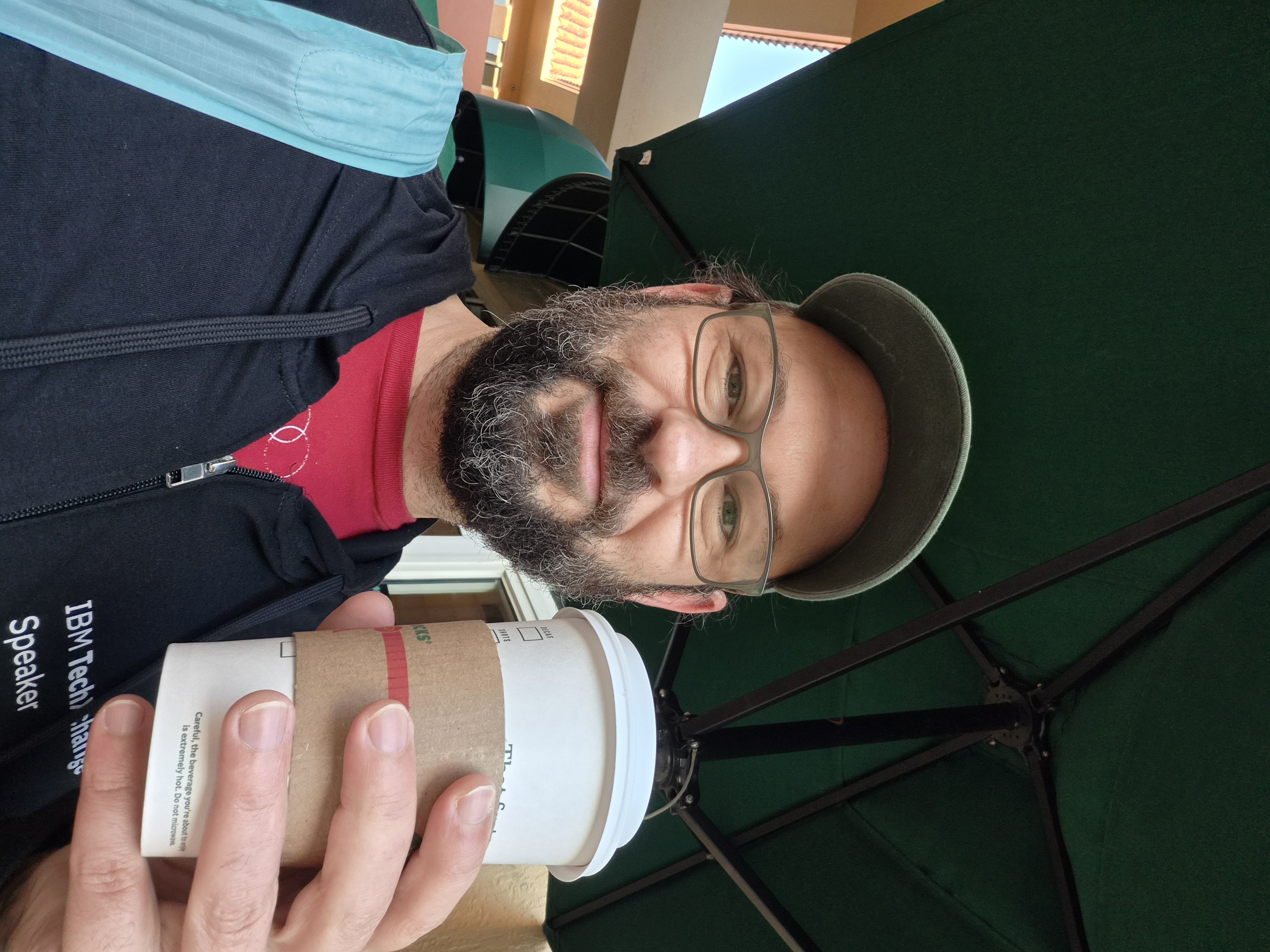
Musician and software engineer. Former climate scientist. Always a webmaster.
https://robida.net/contact@robida.netKey Biscayne, FL, 33149, USAWoke up for my morning walk and it was 46F! Decided to go for warm coffee.
https://robida.net/entries/2026/01/16/woke-up-for-my-morning-walk-and-it-was-46f-decidedgeo:25.697757,-80.163186;name=StarbucksMusician and software engineer. Former climate scientist. Always a webmaster.
https://robida.net/contact@robida.netKey Biscayne, FL, 33149, USAHeya, I'm Beto! Welcome to my blog.
Like probably every blog in the world, this one is a work-in-progress. Right now it's pretty self-contained: you can read entries and follow them on your feed reader, but that's mostly it. You can log in, but for now you can't do anything. In the near future you'll be able to like entries and leave comments, and I'm also adding support for WebMentions.
What else?
/blogroll shows a list of the people I follow on the internet.
/read shows books I'm reading, or want to read, or have read recently.
I'm a musician and software engineer, so I write mostly about that. I've also been vegan 🌱 for almost 10 years — for the animals, for the planet, and for my health.
Musician and software engineer. Former climate scientist. Always a webmaster.
https://robida.net/contact@robida.netKey Biscayne, FL, 33149, USAMusician and software engineer. Former climate scientist. Always a webmaster.
https://robida.net/contact@robida.netKey Biscayne, FL, 33149, USAMusician and software engineer. Former climate scientist. Always a webmaster.
https://robida.net/contact@robida.netKey Biscayne, FL, 33149, USAMusician and software engineer. Former climate scientist. Always a webmaster.
https://robida.net/contact@robida.netKey Biscayne, FL, 33149, USAMusician and software engineer. Former climate scientist. Always a webmaster.
https://robida.net/contact@robida.netKey Biscayne, FL, 33149, USA